
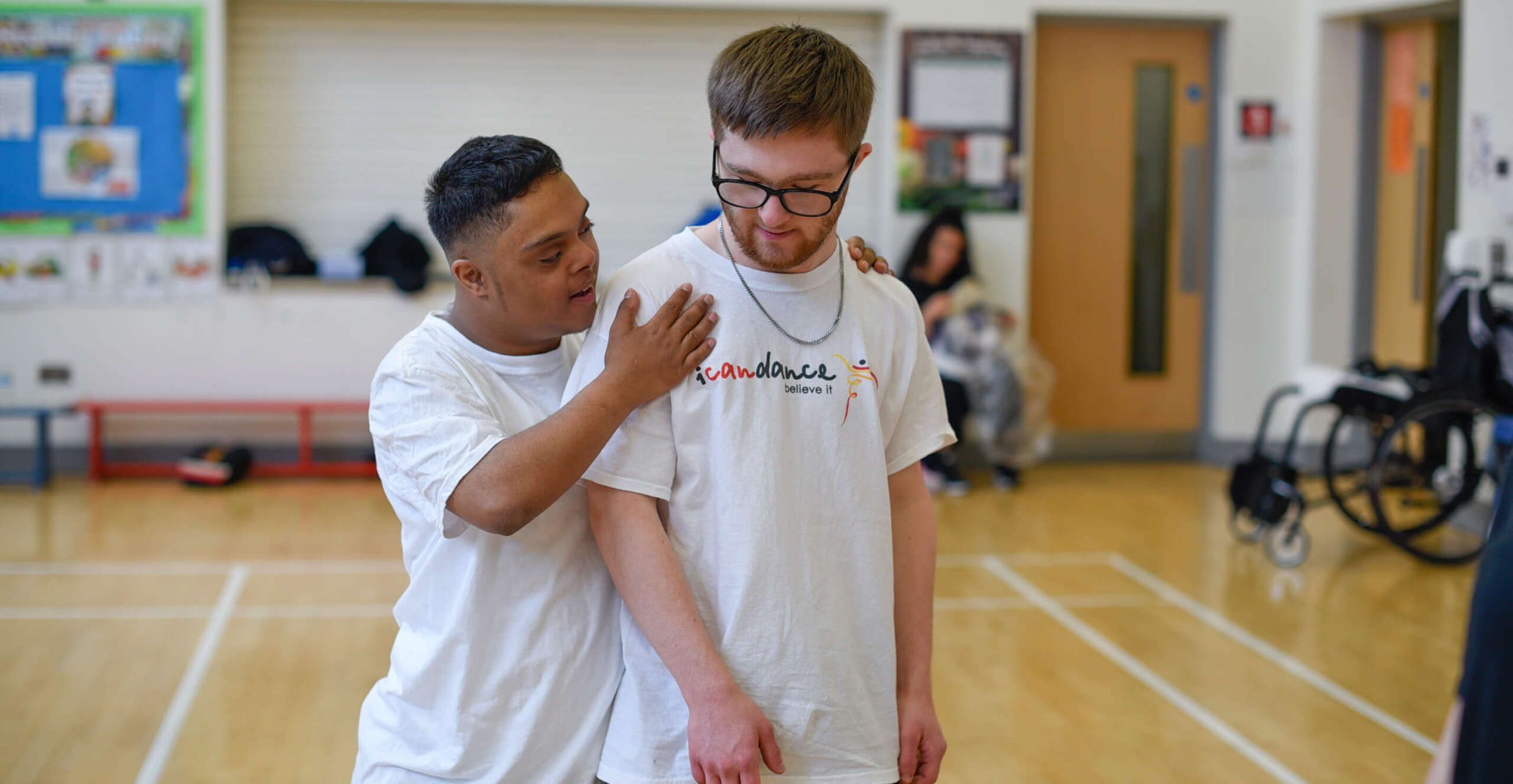
A New Perspective: Call to Action
Children and young people should be seen, heard and represented
Ensure visibility of positive, aspirational role models
- Listen to those with lived experience
- Give young people the opportunity to guide changes in practice to achieve greater inclusion and accessibility for all
- Collaborate widely to learn or share with others how to achieve inclusive practice
- Offer a variety of access points, recognising that every person is different, to maximise effective participation of all individuals
- Make the workplace accessible. Consider how inclusivity is reflected in your organisational ethos, strategy, and implementation
- Prioritise organisation workforce diversity at all levels to create a more inclusive environment and organisational culture
- Use appropriate inclusive language (social model of disability). Be conscious of changes in language usage. If unsure, ask the person with the lived experience. Artists are artists
A diverse and inclusive workforce
We wanted to further explore where organisations are on their own equity, diversity and inclusion journeys and how they are working towards fostering more inclusive environments for young people to access.
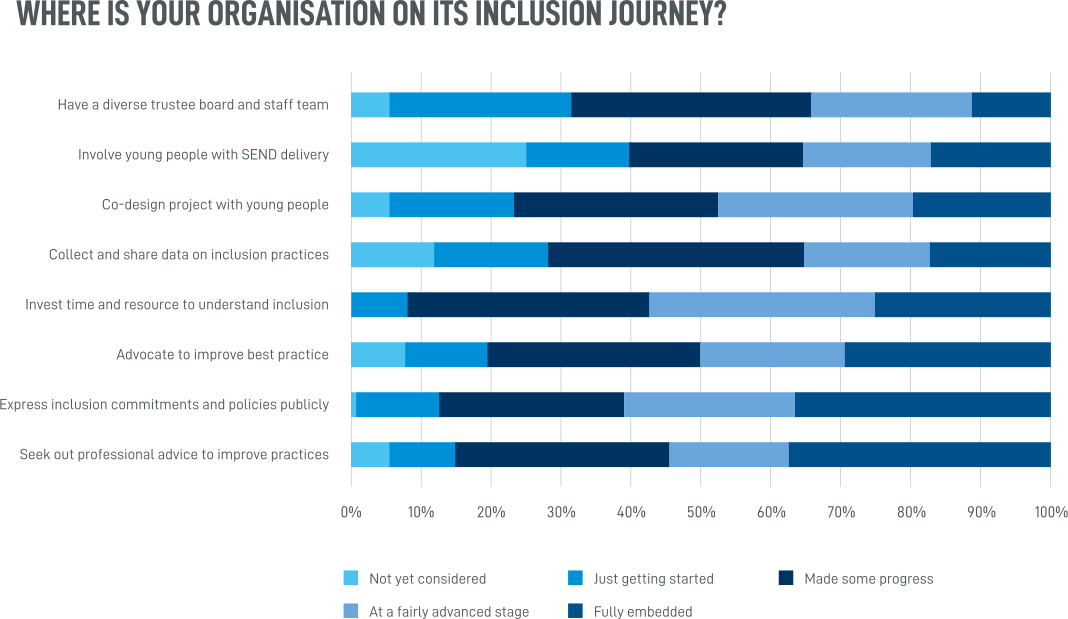
Organisations were asked where they are with regards to various aspects of their inclusion journey, from ‘not yet considered’ to ‘fully embedded’. Overall, organisations had made more progress with seeking out information and advice and making commitments, than the practical aspects of involving D/deaf, disabled and neurodiverse young people in the design and delivery of projects, data collection, and considering the diversity of their own organisation.
All organisations surveyed had at least started with investing time and resource to understand inclusion. Seeking out professional advice to improve practices was most likely to be fully embedded (38%), closely followed by expressing inclusion commitments and policies publicly (36%). This could be down to pressures from funding bodies such as the Arts Council and their requirements to have greater transparency on equity, diversity and inclusion.
Organisations were most likely to say that they had not yet considered involving young people in delivery (25%), followed by collecting and sharing data on inclusion practices (13%). These areas were also least likely to be fully embedded, alongside having a diverse trustee board and staff team, and are therefore potential development areas for organisations in the sector.
Organisations were most likely to just be getting started with having a diverse trustee board and staff team (27%), followed by co-designing projects with young people (19%). This indicates that there is interest in these areas, but support may be needed by some organisations.
Our CEO is a deaf man, Our board is 75% disabled, Our staff are 51% disabled. We recruit disabled staff to deliver our projects and seek out opportunities to promote disabled people in employed roles, including opportunities for learning”
Action on Disability
“CEO started as a Community Focus student, volunteer, trustee and chairman. Multiple Community Focus students volunteer, one student is a trustee.”
Community Focus Inclusive Arts
“We have adapted our musicians’ recruitment process to support disabled musicians into Live Music Now and successfully recruited new disabled professional musicians. This includes a new partnership with an orchestra with blind professional musicians who will be delivering sessions in our special schools programme”.
Live Music Now
“We are encouraging organisations and projects that focus on under represented groups. We will always look at how well trustees and staff reflect the people that the proposal is working with. We reflect annually on the awards we have made which helps us think about any areas we may want to be more proactive in.”
Anonymous Funder
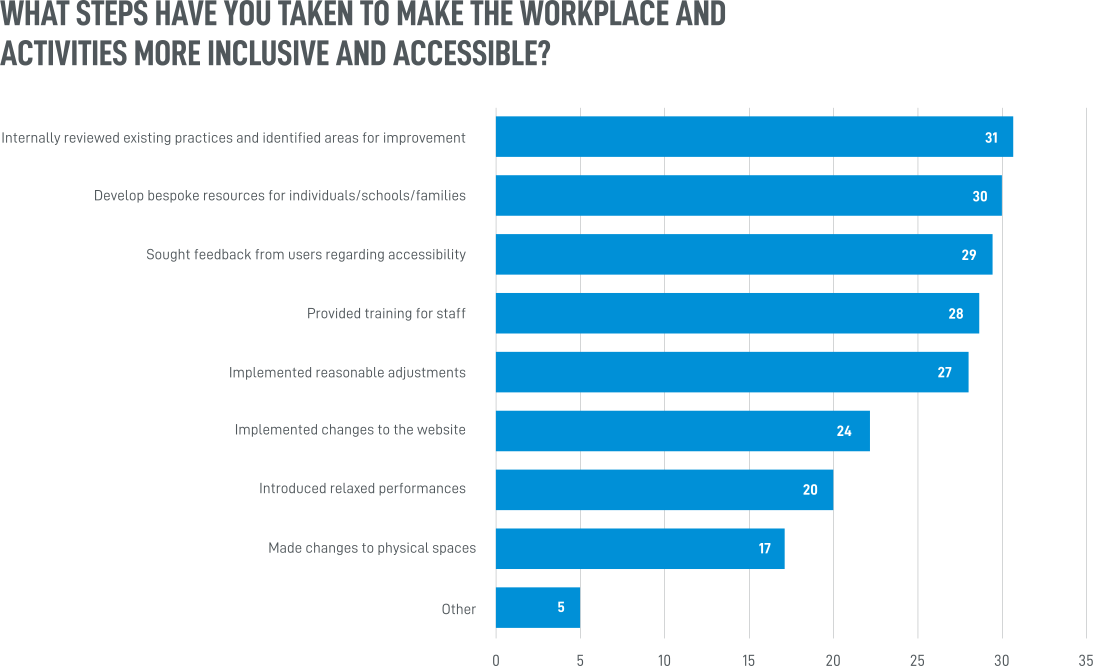
Of those responses, the majority stated that they had reviewed and developed practices and implemented changes as well as seeking feedback from users. Nearly all organisations had internally reviewed existing practices and identified areas for improvement (97%) and developed bespoke resources (94%). The vast majority had sought feedback on accessibility (91%), provided training for staff (88%), and implemented reasonable adjustments (84%). Making changes to physical spaces was the least commonly taken step, with around half of the organisations (53%) reporting that they had done this.
More than half of the respondents stated that they had worked with special educational need schools/settings to improve the accessibility of their projects. This is a significant development from the findings reported in Perspectives and Change of Perspectives when relationships between schools and Arts organisations were significantly underdeveloped; the fact that schools are now considered by Arts organisations to be experts in this field is hugely encouraging and a sign of how the sectors are now working together far more in partnership.
Role Models
As identified in the Stand Up For SEND Call to Action, seeing positive role models can have a significant impact on D/deaf, disabled and neurodiverse children and young people and also their families. Role models provide inspiration, guidance and motivation for young people to follow their own aspirations, regardless of learning or access needs, and can also provide practical advice based on their own experiences,
Just under half of the Arts organisations (49%) stated that they include visible aspirational role models representative of additional needs in their activities, with a further 28% developing their practice to include role models. A similar proportion of schools stated that, since 2019, they had seen an increase in the visibility of appropriate role models for their students within Arts projects (48%), while 44% had seen no change and 8% had seen decreased visibility. Organisations have reported that they use role models in various ways and across their organisations. Key areas where role models are regularly used include:
- Sessional staff to deliver on projects
- Performers
- Trustees
- Youth advisory boards
All schools felt that it is important for organisations to adopt an inclusive ethos and inclusive project delivery, with 88% stating that it is essential.
Most schools had not seen more diversification in the workforce of external organisations that they had engaged with since 2019. Just under a third of schools (31%) stated that they have seen more diversification, but a similar proportion were unsure (31%) and over one in four (27%) had seen no change. Twelve percent felt that the workforce was getting less diverse.
Despite progress, there is still a significant minority of Arts organisations (22%) that do not include any aspirational role models representative of additional needs, and are not developing their practice to do so.
“It [the inclusion of role models that are representative of young people with SEND] is expressed in the grant priorities that we talk about on our website, and in the enquiry conversations we have with potential applications. Our application forms explicitly ask about it too.”
– Funder
Considerations
Nearly all organisations have started on their journey of addressing inclusion across their practices. Many of these have stated they have fairly advanced or embedded practice across the board.
The majority of organisations that responded to the survey seem to have made progress in considering and changing their practices to make the workplace and activities more inclusive and accessible.
It is going to be important to recognise those with more experience in identified areas and share the practice accordingly e.g. through networks.
It is for the sector to identify how best to support each other but it would seem a reasonable next step to decide how those with more experience can support others whilst also reflecting on their own practice.
For those who are yet to consider this or are at the early stages of their journey there will be examples of practice that can inform their developments in this important area.
It is through sharing practice and exploring the processes and implications of change that the best use can be made of time and expertise to effect more positive outcomes in relation to more inclusive and accessible workplaces and activities to the benefit of all those we wish to include.
Stronger Voices Together
Stronger Voices Together, the John Lyon’s Charity podcast champions and promote inclusive opportunities for children and young people with learning and access needs.
Embracing Inclusive Practice: Fight the fear
In this episode of Stronger Voices Together, guests discuss how organisations can seek to develop truly inclusive practices that make everyone feel welcomed and included.


© Copyright 2020 – John Lyon’s Charity. Design: Pad Creative
Registered Charity No. 237725