
A New Perspective: Call to Action
Opportunities need more visibility from point of access to celebrating work and achievements
- Increase visibility of young people in all aspects of a project
- Value the work of children and young people to help to build more inclusive communities
- Celebrate the children and young people in appropriate and creative ways to demonstrate achievements, and to inform and educate the wider community
- Share participants’ work alongside the work of mainstream peers and as part of core programmes
- Work towards a more standardised approach to advertising opportunities for young people and families to increase awareness and make it easier for families and schools to find activities
- Share expertise and knowledge
Finding Activities
Schools typically found the Arts and cultural activities that they engage with by researching and sourcing activities themselves (80%), or by being directly approached by external organisations (76%). Around half (48%) found activities through forums and networks.
The following avenues were typically used by schools when looking for activities:
- Venue websites
- Local authority websites and newsletters
- Special educational needs websites
- Networking organisations
- Special educational needs and disability networks
- SENDCo websites
- Social media
- Other media and magazines
Preferred terminology and communications for advertising Arts and culture activities, as stated by schools:
- D/deaf, disabled and neurodivergent as opposed to ‘SEN’
- ‘Open to all’
- Where possible using signing symbols, social stories and adapted language
“Websites vary in terms of how information is presented and can be hard to navigate”
School
Sharing Work and Practice
The majority of Arts organisations stated that they share their inclusive practices with others (63%) or that this is an area in development (24%).
The most common ways that organisations advertise activities for young people and their families was stated as being via their organisation websites, social media, direct mail to schools, or newsletters. Other routes include:
- partner organisations and schools
- networks: school, council, partners
- outreach: local community and targeted outreach
- local youth groups
- Young People’s Foundations
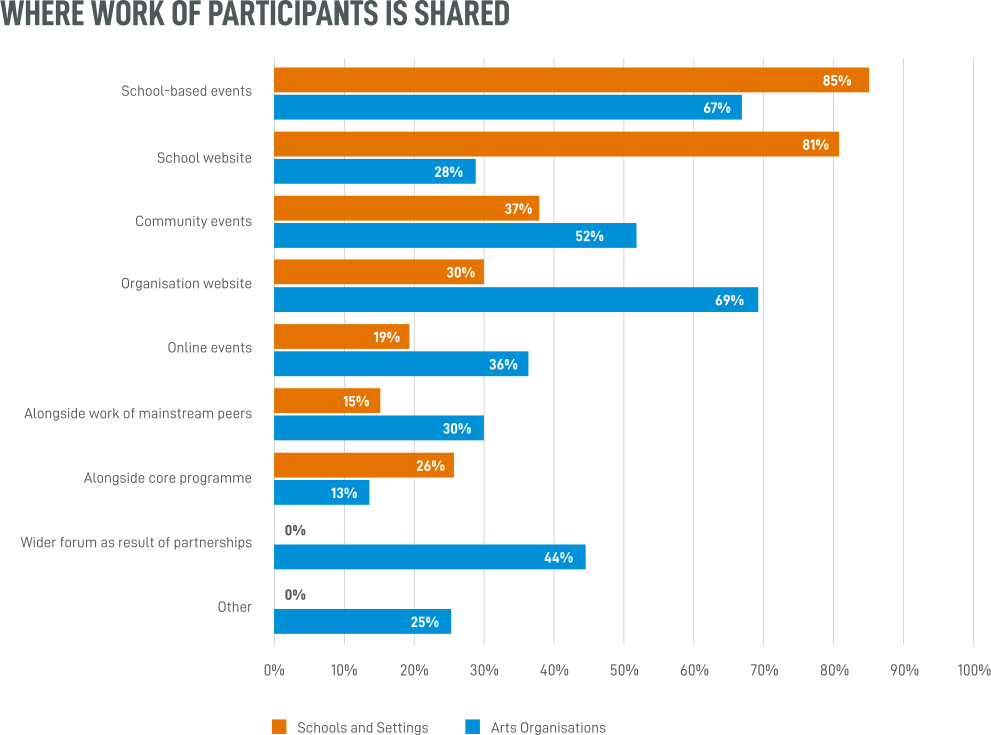
The vast majority of schools shared the work of their young people at school-based events (88%) or on the school’s website (85%). School-based events were also a popular way of sharing young people’s work among organisations (69%) along with on the organisation’s website (70%). Over half of organisations also shared work through community events (53%).
Other ways organisations and schools shared work included:
Social media and online platforms
- Social media and vlogs are a good way to share young people’s work and feedback.
- Families often share information about sessions on their social media networks.
- Sharing work online extends the audience work is shared to.
- Online platforms such as Zoom have increased the accessibility of sharing of young people’s work.
- Websites are a clear tool to sharing work, case studies, feedback and resources.
Live Events
- Organisations largely reported a move back to in-person events post pandemic.
- Events hosted in mainstream and specialist settings with performances alongside each other ensure work is equally valued.
- Small performances and events might be a more comfortable setting for young people to share work.
- There should be opportunities to be included in wider community events, to ensure best practice is shared widely.
Film
- Films that show young people’s work and document the process are easy to share with family, teachers and to others looking at best practice.
- Film can be used to show other young people what peers have achieved and provide role models.
Challenges to sharing young people work and best practice included:
- Covid-19: Online/recorded performances were the norm in 2020/21, but while these are often easier to organise, there were concerns that experience of sharing isn’t as impactful.
- In-person opportunities: It can be challenging to find the budgets to deliver more expensive in-person events, particularly when there are specific venue requirements.
- Permission: Obtaining permission from parents or carers to share work externally, particularly when photo or video permissions are needed.
Advocacy and Lobbying
Advocacy remains a crucial consideration for organisations striving to leverage more opportunities for children and young people with special educational needs and/or disabilities. During a John Lyon’s Charity roundtable event, organisations and schools emphasised the importance of advocacy to create change, both at an organisational level and looking broader to societal change. They highlighted that they “had given up writing to MPs” and other traditional advocacy methods which felt like bureaucratic exercises.
The organisations and schools consulted agreed that effective advocacy must be specific and focused on tangible outcomes rather than just portraying projects in a positive light. It was agreed that there is now a necessity to shift from discussing the educational benefits of Arts and culture projects and to campaign for their broader societal value.
A “hierarchy of change” approach was discussed, calling for internal organisational change as an initial first step, followed by collaboration with other colleagues within the sector before later engaging with government bodies, local authorities, and parliamentary groups, with an ultimate goal to deliver collective advocacy efforts, presenting a unified voice to spark systemic change.
Networks such as the Cultural Inclusion Manifesto and Local Cultural Education Partnerships (LCEPs) were identified as good platforms for organisations to join and to advocate for inclusive practices and societal change collectively.
Cultural Inclusion Manifesto
Children and young people with disabilities do not have equal access to cultural and arts opportunities. The Cultural Inclusion Manifesto wants to change this. It calls for schools, cultural and Arts venues and disability organisations to co-produce better and more opportunities for children and young people.
The Cultural Inclusion Manifesto is a statement of intent to work to address this and is fully supported by John Lyon’s Charity. The Manifesto asks you to make a commitment towards greater, cohesive partnerships. It needs your support!
Considerations
At a time when organisations are aiming for inclusive and accessible practices it is a very positive sign to know that such a large proportion of organisations either share or are working towards sharing their work to improve practice overall.
When considering success we should always be mindful of the reason for sharing and what and when is appropriate.
Sharing practice is an area of development where there is evidence of organisations and schools finding entrepreneurial ways of sharing work by continuing to use some sharing strategies explored during the period of the pandemic. These practices have in some cases been embedded whilst also returning to live sharing in the local and wider community.
Networks, such as the Cultural Inclusion Manifesto, are a vital platform to share best practice, challenge the sector and ones own perception of best practice.
There is an important role for organisations such as John Lyon’s Charity to play in amplifying and combining voices for change together to have a greater impact than on an individual level.


© Copyright 2020 – John Lyon’s Charity. Design: Pad Creative
Registered Charity No. 237725