

A New Perspective: Call to Action
Everyone regardless of ability should have equal access to fulfilling career opportunities
- Consider ‘what next’ for participants to reflect their passions and talents, whether through qualifications, careers within the Arts, or for fun
- Explore models of effective practice including apprenticeships, internships, short and long-term placements, as well as permanent employment
- Listen to the voice of individuals so that they have agency in their own pathway
- Create and develop roles and processes in partnership with young people to gain an understanding of an individuals’ accommodations
- Consider the benefits for your organisation of creating new and innovative career roles and inclusive recruitment processes
- Consider accreditation routes and schemes that could support your organisation’s own journey of inclusive workforce practices
- Share knowledge and experiences with other organisations about the practicalities and implications of inclusive working practices
Supporting young people with the ‘what next’
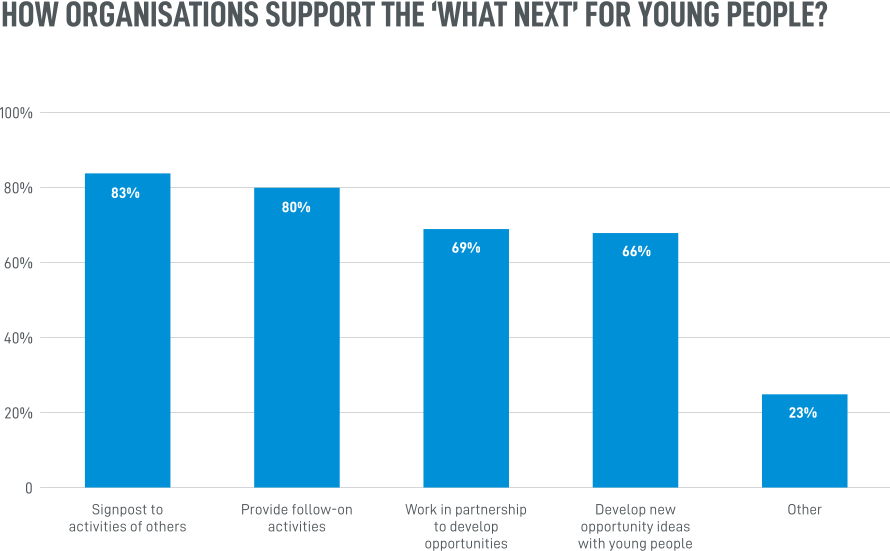
Arts organisations were asked how they support the “what next” for young people as part of their engagement programme. Most organisations either provide activities or signpost to the activities of others, with 83% reporting that they signpost to the activities of other organisations and 80% reporting that they provide suitable follow-on activities. Most are also proactively engaging with others, whether partners or young people. Around two in three said that they work in partnership with other organisations to develop opportunities (69%) and that they develop new opportunity ideas with young people (66%).
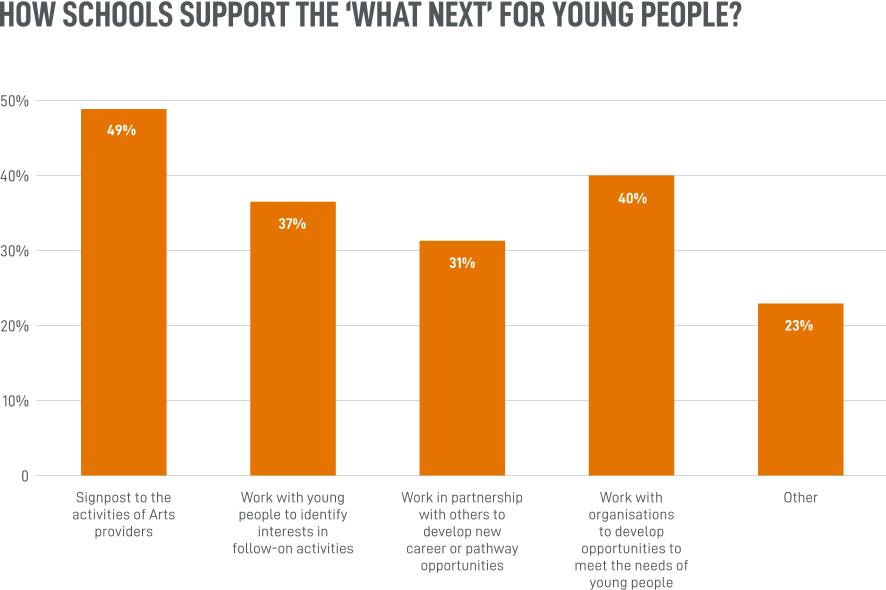
When asked how they support their students to engage in additional Arts enrichment activities outside of school, just over two in three schools said that they signpost to the activities of Arts providers (68%). More than half work with organisations to develop opportunities to meet the needs of young people (56%) and with young people to identify interest in follow-on activities (52%).
Two in three Arts organisations reported that they provide career opportunities or pathways to qualifications for participants (55%) or that these are in development (12%). A similar proportion of schools reported working in partnership with organisations to provide or develop career opportunities and pathways to qualifications (46%) or that this work is in development (23%).
What opportunities are available?
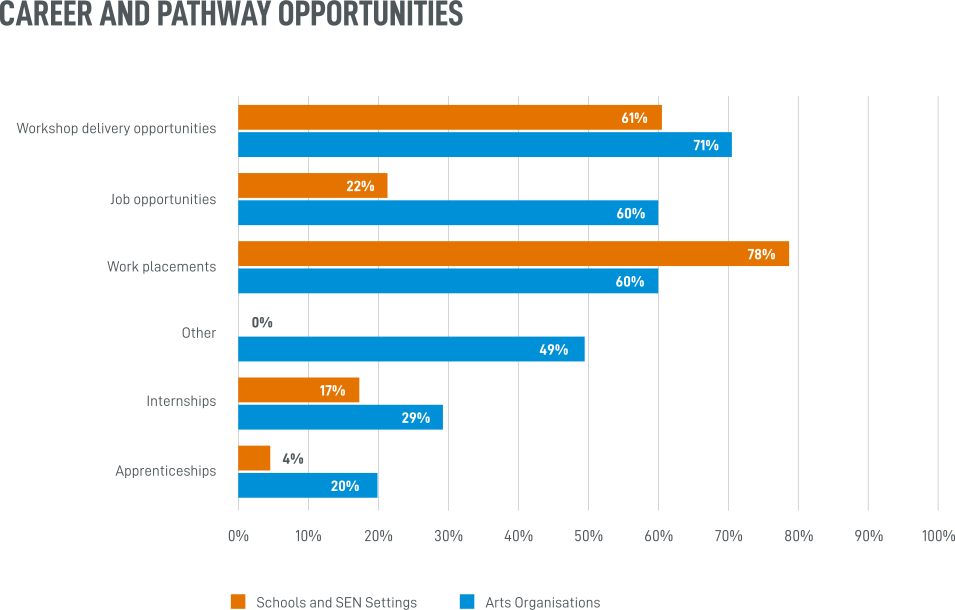
When it comes to the types of career opportunities and pathways to qualifications provided for young people, Arts organisations were most likely to provide:
- Workshop delivery opportunities (71%)
- Job opportunities (60%)
- Work placements (60%)
Schools were most likely to provide:
- Work placements (78%)
- Workshop delivery opportunities (61%)
Schools were significantly less likely to provide job opportunities than organisations (22%). They were also less likely to provide internships (17% vs. 29%) and apprenticeships (4% vs. 20%).
There is a perception amongst schools that there are limited onward pathways for young people in the Arts sector: three quarters of schools perceived that of the available career and qualification pathways, less than 10% were within the Arts sector.
Challenges stated by organisations in providing further opportunities:
- Balance within Organisation
The balance between the Engagement / Education programme offering specific career opportunities and that of the wider organisation as a whole which does not offer schemes (work experience, internships etc.). - Benefits System
The fixed parameters of the benefits system means that people with complex and hard-won support packages are not able to earn on a freelance basis or sell artwork on an occasional basis without their benefits being impacted. - Capacity
Organisational capacity required to do this [develop career pathways] has been prohibitive. The Arts sector is still in recovery-mode from Covid-19 and needs to build these opportunities into programmes where there is greater scope to manage this type of work. - Costs
Resourcing staff time for development work is a challenge. - Expectations
There is a need to be realistic about expectations and very clear about the suitability of a project for D/deaf, disabled and neurodiverse. - Equal Access
“Increased access to employment or qualification opportunities can only be met if employers adapt to ensure equal access. This can mean changing traditional recruitment processes and adapting workplace tasks to ensure everyone has equal access. There also needs to be greater awareness around access to work funding to support disabled people in employment”. Action on Disability - Qualifications
Sourcing relevant qualifications to offer young people that are recognised by colleges and employers is very important.
“Finding an ideal qualification to offer the young people that works regularly in informal out-of-school arts-based setting. Any qualification would need to be something that the young people would be able and want to do and be meaningful and beneficial for disabled young people with severe learning disabilities and complex needs, and something which could be delivered without onerous paperwork. For example, unfortunately Arts Award is only open to young people up to the age of 25. Many of EFDSS disabled participants are over this age (up to 30 years). Arts Award have been contacted and asked to change this policy to make their qualification possible for learning disabled younger adults. This has not been successful. Support is welcome to encourage this to change”. EFDSS
- Time
Matching individuals who have unique skills can be very time-consuming. It is difficult to do at a whole class level.
Roundtable Highlights
Examples of opportunities for young people
Funder Perspective
On career opportunities, funders made the following comments
Considerations
There is a great deal of interest to offer career and qualification opportunities where it is a suitable pathway for the young person.
Sharing of practice in this area will be crucial to learn where practices are effective, what the challenges are, and how these can be overcome.
Where opportunities are available within an Arts organisation, these need to be communicated clearly with available support structures clearly visible.
More also needs to be done to create opportunities for careers within the Arts sector for young people with disabilities.
Organisations need encouragement and training from the top down to implement change. It has to be organisation-wide to have the greatest impact.
Consideration should be given to reigniting networking and convening events that have not recovered since the pandemic. This would help create some excitement around available opportunities and increase chances for signposting to other provisions.
Stronger Voices Together
Stronger Voices Together, the John Lyon’s Charity podcast champions and promote inclusive opportunities for children and young people with learning and access needs.
Building Career Pathways – Uncovering untapped potential
In this episode of Stronger Voices Together, guests delve into the barriers faced by D/deaf, neurodiverse and disabled young people in securing employment and advocate for the systemic change needed to bridge the employability gap.


© Copyright 2020 – John Lyon’s Charity. Design: Pad Creative
Registered Charity No. 237725
Comments from schools
Schools consider factors that impact or challenge a young person’s career pathways